
Sleep Well. Live Well.
Every night, as the world quiets down, something extraordinary happens inside your brain and body.
Sleep is not biological downtime. It is an active process during which the brain consolidates memories, emotional systems reset, tissues repair, immune processes are supported, and the brain performs essential metabolic housekeeping. The science increasingly points toward one conclusion: sleep is not a luxury. It is a biological necessity.
The Importance of Sleep: What the Science Says
We spend roughly one-third of our lives asleep, yet sleep is one of the most biologically active periods of the day. During sleep, tissues repair, memories are consolidated, immune function is supported, emotional systems are recalibrated, and metabolic waste is cleared from the brain.
Brain
Sleep supports memory consolidation, learning, cognitive performance, emotional regulation, and metabolic waste clearance.
Body
Deep restorative sleep supports tissue repair, hormonal regulation, cardiovascular health, metabolic functioning, and physical recovery.
Immune System
Sleep interacts closely with immune function. Chronic sleep disruption has been associated with inflammatory activity and poorer overall health.
How Much Sleep Do You Need?
The American Academy of Sleep Medicine and the Sleep Research Society recommend that adults regularly obtain at least seven hours of sleep per night to support health.
The National Sleep Foundation commonly recommends approximately seven to nine hours for adults.
Large-scale reviews involving millions of participants have generally found that sleep durations near seven to eight hours are associated with favorable health outcomes in adults.
Individual sleep requirements vary, however, and duration is only one component of healthy sleep. Quality, continuity, timing, and the ability to move normally through the stages of sleep also matter.
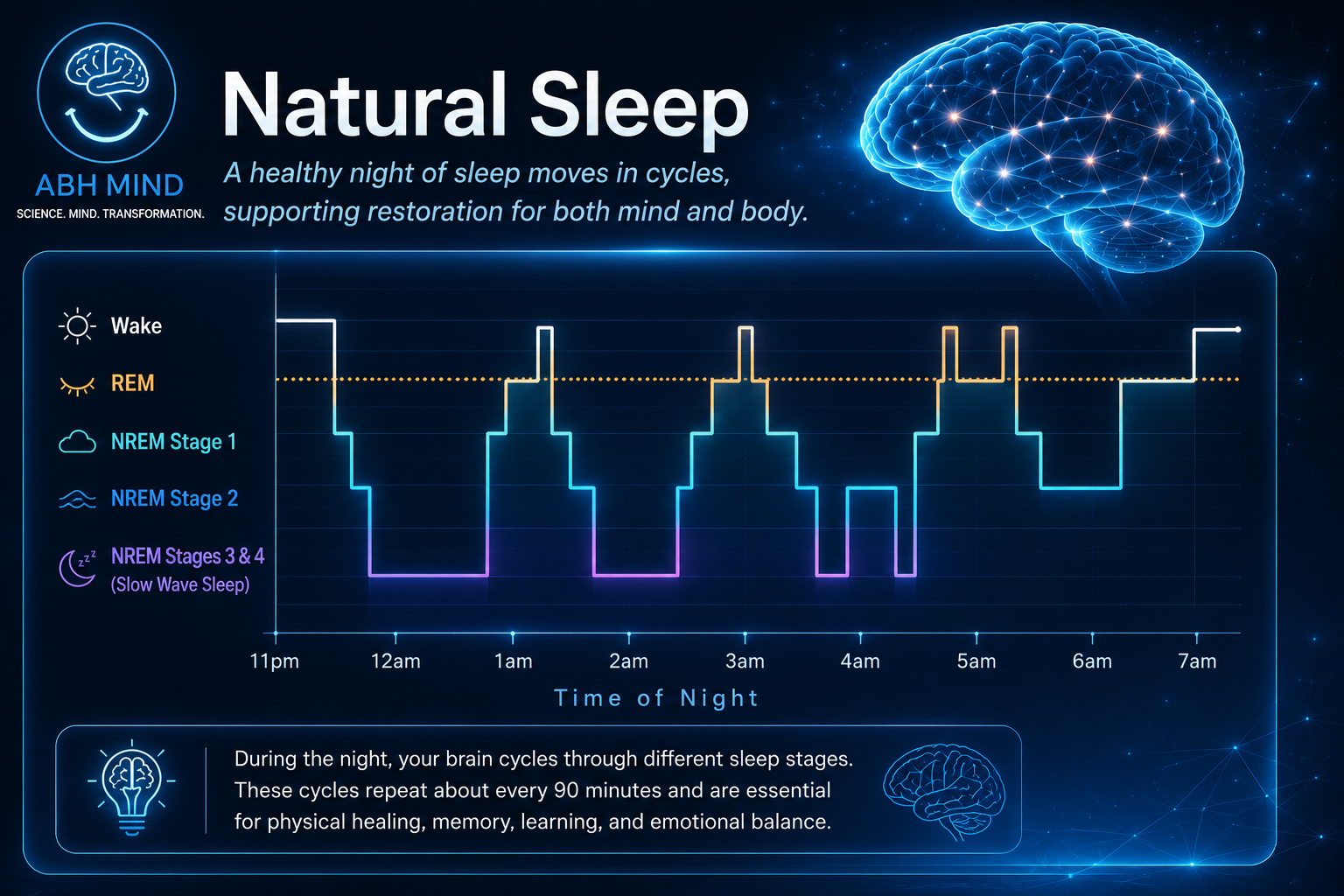
Sleep Happens in Cycles.
Sleep is not a single uniform state. During the night, the brain repeatedly moves through different stages of non-REM and REM sleep.
Sleep and Your Brain
Sleep is when some of the brain's most important maintenance, learning, and information-processing functions occur.
During non-REM sleep, recently learned information is progressively consolidated. Interactions among the hippocampus, cortex, slow oscillations, and sleep spindles help stabilize new memories and support long-term retention.
Sleep also supports the brain's glymphatic system, a waste-clearance network involving cerebrospinal fluid and specialized glial cells. Glymphatic activity appears particularly important during deep sleep and is involved in clearing metabolic byproducts from brain tissue.
Researchers are especially interested in the relationship among disrupted sleep, glymphatic clearance, amyloid-beta, tau proteins, and neurodegenerative disease. This is one reason slow-wave sleep has become an important area of modern neuroscience research.
Every Stage Has a Job.
Healthy sleep depends not only on the number of hours spent asleep, but also on the brain's ability to move through normal sleep architecture.
The Transition Into Sleep
N1 is the brief transition between wakefulness and sleep. Muscle activity begins to decrease, awareness of the surrounding environment fades, and brain activity begins changing toward sleep.
Light Sleep & Memory
N2 occupies a substantial portion of the night and includes characteristic electrical patterns known as sleep spindles and K-complexes. Sleep spindles are associated with learning, memory consolidation, and the stabilization of newly acquired information.
Deep Restorative Sleep
N3, often called slow-wave or deep sleep, is characterized by slow delta activity. This stage is strongly associated with physical restoration, immune function, hormonal activity, memory processing, and brain waste clearance.
Emotional Processing
REM sleep is associated with vivid dreaming and high levels of brain activity. It plays an important role in emotional memory, learning, and the processing of emotionally significant experiences. REM periods generally become longer toward morning.
Sleep and Mental Health Are Deeply Connected.
Sleep loss can impair the prefrontal cortex's ability to regulate emotional responses, contributing to increased emotional reactivity, irritability, difficulty concentrating, and poorer coping with stress.
Research examining interventions designed to improve sleep has also found corresponding improvements in mental health outcomes, including symptoms of depression, anxiety, and rumination.
Sleep disturbance is increasingly understood as a transdiagnostic factor: a process that can occur across multiple psychological conditions rather than belonging to only one diagnosis.
Better Sleep Can Support Better Emotional Regulation.
The relationship is bidirectional. Mental health problems can disrupt sleep, while persistent sleep disturbance can make emotional regulation, concentration, stress tolerance, and psychological recovery more difficult.
Sleep and the Immune System
Sleep and immune function communicate in both directions. Healthy sleep supports immune signaling and normal responses to infection, vaccination, and physiological stress.
Chronic sleep deficiency has also been associated with systemic low-grade inflammation and with health conditions involving cardiovascular, metabolic, neurological, and immune functioning.
This does not mean that sleep alone determines disease risk. It does mean that sleep should be considered alongside nutrition, activity, medical care, stress management, and other major components of health.
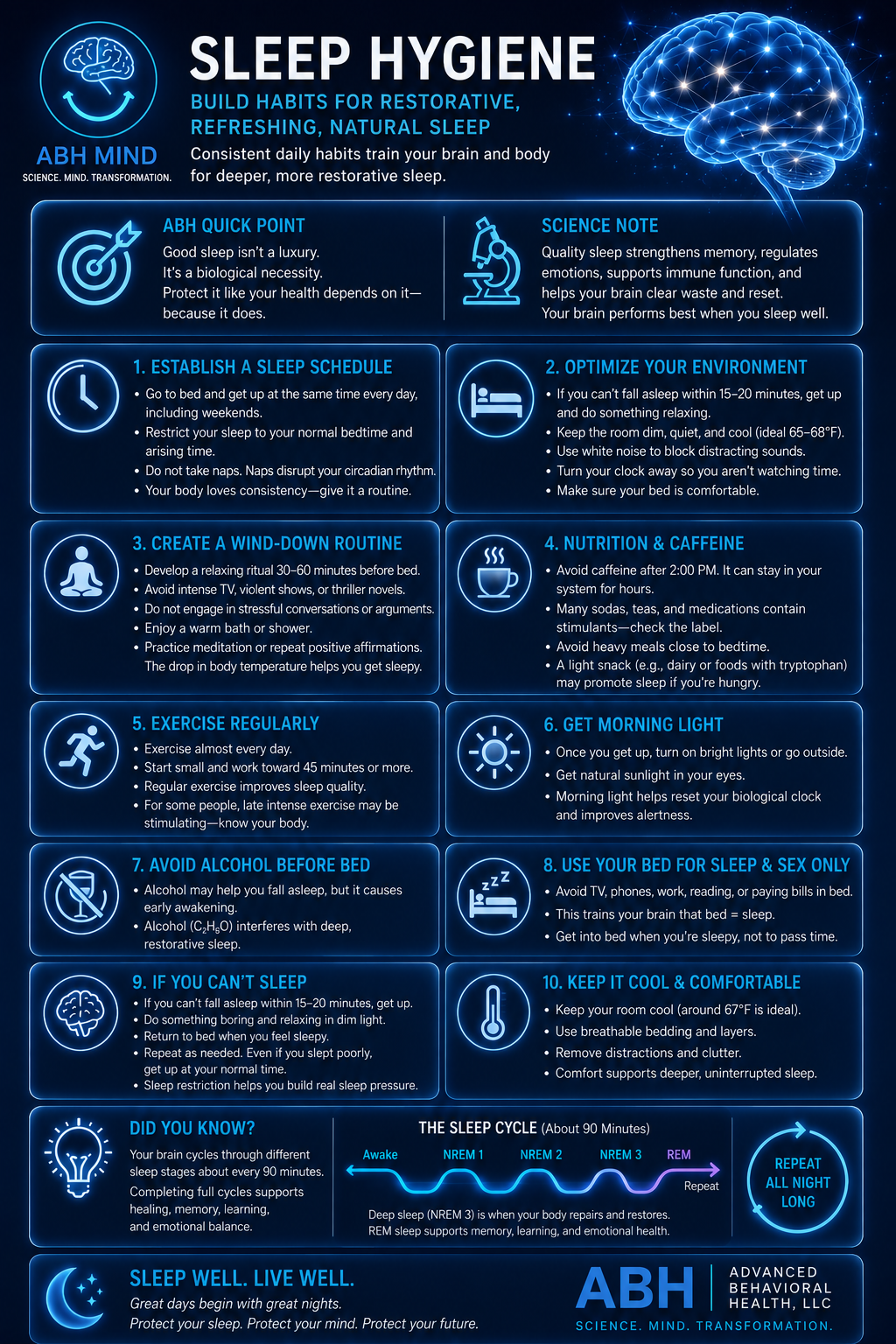
Build Habits for Restorative, Natural Sleep.
Consistent daily habits help train the brain and body for more predictable and restorative sleep.
Establish a Sleep Schedule
- Go to bed and get up at approximately the same time every day.
- Maintain consistency on weekends whenever practical.
- Avoid allowing irregular naps to repeatedly disrupt the sleep schedule.
Optimize Your Environment
- Keep the bedroom dark, quiet, and cool.
- A room temperature near the mid-to-upper 60s °F is comfortable for many people.
- Consider white noise when environmental sounds interfere with sleep.
- Avoid repeatedly watching the clock.
Create a Wind-Down Routine
- Begin a relaxing routine approximately 30–60 minutes before bed.
- Reduce highly stimulating media or stressful conversations.
- Consider reading, meditation, a warm shower, or another predictable calming routine.
Consider Nutrition & Caffeine
- Avoid caffeine later in the day when it interferes with sleep.
- Be aware that coffee, tea, soda, energy products, chocolate, and some medications may contain stimulants.
- Avoid very heavy meals immediately before bedtime.
Exercise Regularly
- Regular physical activity can improve sleep quality and overall health.
- Build gradually toward a sustainable exercise routine.
- If late exercise is stimulating for you, schedule it earlier.
Get Morning Light
- Seek natural light after waking.
- Morning light helps regulate the circadian system.
- Bright daytime light can support alertness during the day and better timing of sleep at night.
Be Careful With Alcohol
- Alcohol may make falling asleep initially easier for some people.
- It can fragment sleep later in the night.
- Alcohol may interfere with normal deep and REM sleep architecture.
Reserve the Bed for Sleep
- Avoid turning the bed into a place for work, television, scrolling, or paying bills.
- Go to bed when sleepy rather than simply because you are bored or passing time.
- Strengthen the association between bed and sleep.
If You Cannot Sleep, Get Up
- If you remain awake for an extended period, consider leaving the bed.
- Do something quiet and relaxing in dim light.
- Return to bed when sleepiness returns.
- Maintain the planned morning wake time whenever possible.
Keep It Cool & Comfortable
- Keep the room comfortably cool.
- Use breathable bedding and comfortable layers.
- Reduce unnecessary light, noise, clutter, and other distractions.
What You Can Do
Improving sleep often begins with consistent, relatively simple behaviors repeated over time.
Aim for an appropriate and consistent sleep opportunity each night.
Regular wake and sleep times support circadian stability.
Limit habits that repeatedly fragment restorative sleep.
Persistent insomnia and sleep disorders deserve clinical attention.
Treat sleep as an important indicator of physical and psychological health.
Persistent Insomnia Is Treatable.
Sleep problems should not automatically be dismissed as something a person simply has to live with. Cognitive Behavioral Therapy for Insomnia (CBT-I) is widely recommended as a first-line behavioral treatment for chronic insomnia. CBT-I addresses the behavioral, cognitive, environmental, and physiological processes that can perpetuate difficulty falling asleep, staying asleep, or obtaining restorative sleep.
Great Days Begin With Great Nights.
Sleep is foundational to physical health, emotional well-being, cognitive performance, learning, memory, and resilience. If you are experiencing persistent problems with restorative sleep, Advanced Behavioral Health would be happy to answer questions about treatment options and help determine an appropriate next step.
Call (256) 945-7959Advanced Behavioral Health
How Healthy Are Your Sleep Habits?
Sleep is shaped by more than the number of hours you spend in bed. Daily routines, circadian timing, your sleep environment, and what you do when you cannot sleep can all influence restorative sleep.
Consider your typical behavior during the past few weeks. For each statement, choose the response that best describes you. Answer based on what you actually do—not what you think you should do.
Your Sleep Habit Priorities
Based on your responses, these areas may be particularly useful places to focus.
Persistent difficulty falling asleep, staying asleep, waking too early, excessive daytime sleepiness, loud snoring, gasping during sleep, or other significant sleep concerns should be evaluated by an appropriate healthcare professional.
© Advanced Behavioral Health. All rights reserved.
What Is Your Sleep Chronotype?
Your internal circadian clock influences when you naturally become sleepy, when you prefer to wake, and when you tend to feel most alert. Discover whether your biological preference leans toward morningness, eveningness, or somewhere in between.
Chronotype Is More Than Being an “Early Bird” or “Night Owl”
Chronotype refers to an individual's natural preference for the timing of sleep, waking, alertness, and activity across the 24-hour day. Some people naturally function best earlier. Others naturally become sleepy later and reach their peak alertness later in the day. Most people fall somewhere between these two extremes.
Optional: Compare Workdays and Free Days
Chronotype becomes particularly important when your natural sleep timing conflicts with the schedule required by work, school, or family. Enter your typical sleep timing below if you would like the assessment to estimate the difference between your scheduled and unscheduled sleep patterns.
Natural Sleep Timing
Peak Alertness
Schedule Alignment
What Your Chronotype Means for CBT-I
Chronotype should not be confused with insomnia, insufficient sleep, delayed sleep-wake phase disorder, advanced sleep-wake phase disorder, sleep apnea, or other sleep disorders. Persistent sleep difficulty, excessive daytime sleepiness, significant inability to wake at required times, loud snoring, gasping during sleep, or major disruption of daily functioning should be evaluated by an appropriate healthcare professional.
© Advanced Behavioral Health. All rights reserved.
Alpha-Stim What the Evidence Shows
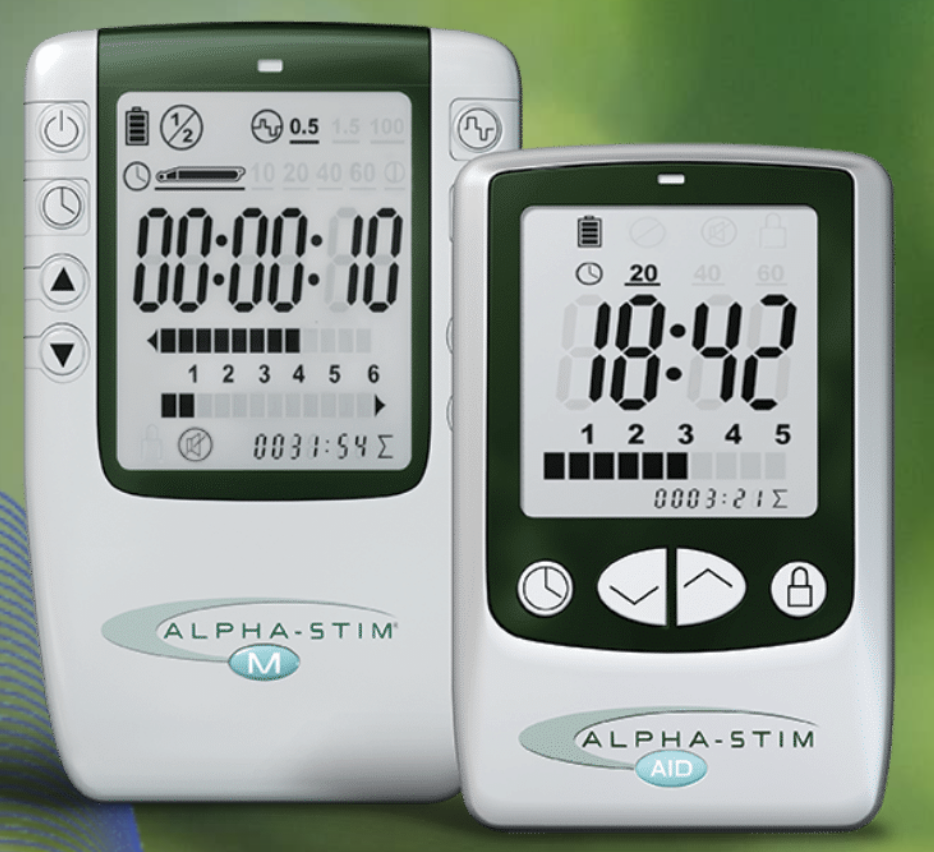
The Alpha-Stim is a portable, phone-sized medical device that delivers cranial electrotherapy stimulation (CES) using a low-intensity alternating microcurrent applied through clips attached to the earlobes.
Alpha-Stim is FDA-cleared for the treatment of anxiety, insomnia, and depression and is typically used for approximately 20 to 60 minutes per day. The device is thought to work in part by increasing alpha oscillatory brain activity, a pattern associated with relaxed wakefulness, and may also influence brainstem, limbic, and cortical activity through stimulation of vagal nerve afferents.
Anxiety
Anxiety is the condition with the strongest evidence supporting Alpha-Stim use. A 2023 meta-analysis of eight randomized controlled trials involving 337 participants found that CES produced a large effect on anxiety symptoms compared with control conditions. A subgroup analysis examining Alpha-Stim specifically also found a significant benefit over sham treatment across four trials involving 230 patients.
A separate observational study of 161 patients with generalized anxiety disorder who had not responded to initial psychological treatment found that nearly half achieved remission of anxiety symptoms after 6 to 12 weeks of daily Alpha-Stim use. Those improvements were sustained at the 24-week follow-up.
Sleep
A 2023 meta-analysis found a large effect of CES on insomnia symptoms among patients with anxiety. In a real-world study of 60 adults who used Alpha-Stim daily for 21 days, 48% achieved insomnia remission and 50% experienced reduced daytime sleepiness.
Improvements were also supported by actigraphy, or wrist-worn sleep tracking. A smaller study involving professional athletes found that five days of CES improved objective sleep efficiency and reduced nighttime awakenings.
Stress
A randomized, double-blind trial involving 62 participants experiencing subjective stress found that three weeks of CES significantly reduced depressive symptoms and altered cortisol patterns compared with sham treatment.
These findings suggest that CES may influence aspects of the body's physiological stress response in addition to its effects on subjective symptoms.
Brain Activity & Regulation
Alpha-Stim is thought to influence neural activity by increasing alpha oscillations, which are commonly associated with a calm, wakeful state. Proposed mechanisms also include modulation of brainstem, limbic, and cortical networks through stimulation of vagal nerve afferents.
Research into the precise mechanisms of CES is ongoing, and no single mechanism fully explains all observed clinical effects.
Generally Well-Tolerated
Across the studies described above, Alpha-Stim was consistently rated as safe and well-tolerated. CES did not appear to increase treatment dropout compared with sham treatment, and serious adverse effects were not reported in these studies. In one real-world study, 48% of participants said they preferred Alpha-Stim over psychotherapy or medication.
Advancing Clinical Knowledge. Strengthening Behavioral Healthcare.
Advanced Behavioral Health is committed to clinical education, professional supervision, evidence-based practice, and scientific literacy. Explore our training programs, supervision opportunities, and developing continuing education initiatives for behavioral health professionals.